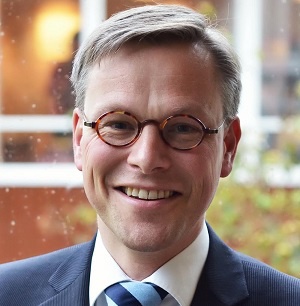
Arnold Huijgen, Ph.D., is a professor of Systematic Theology at the Theological University Apeldoorn, which is associated with the Christian Reformed Churches in the Netherlands. He writes on Christians' identity in Europe.

The Netherlands prides itself on its relative social equality, especially the kind engineered by the tax code. However, Dutch tax policy is creating profound inequality between families based on their lifestyle choices. The tax system hurts families by imposing a greater burden on families with stay-at-home mothers than on homes where both parents engage in paid employment – even if that employment earns the same amount of income. This inefficient and illogical program results in de facto governmental and fiscal pressure for both parents to work outside the home.
Under the Dutch tax system, up to the first €20,000 a person earns is taxed at a rather low rate, whereas every salary totaling €67,072 and up pays a 52 percent tax rate. However, this applies only to individual incomes, not family incomes. If one spouse earns all the household income and the other spouse stays home, that family pays a significantly higher rate than a family where both parents work – even if they earn the same amount of money. The result is that everybody needs a part-time job, but working beyond a certain point is virtually useless from a financial perspective.
Let us take an example of two typical families –...

On May 6, the brand new House of European History in Brussels opened its doors. Since I happened to be in Brussels on the day of the opening, I decided to pay the House a visit. With respect to religion and religious liberty, I found an empty House.
The House - a project of the European Parliament - has been wildly controversial, not only because of its cost (€55 million, or $61.7 million U.S.), but also because of the ideology behind it. Ever since Hans-Gert Pöttering presented the idea of this House “to enable Europeans of all generations to learn more about their own history” in his inaugural speech as president of the European Parliament, there has been an intense debate about what parts of European history should be presented.
In itself, the setup of the permanent exposition is tasteful. But the first floor already hints at what is lacking in the soul of this European project. It is dedicated to various sorts of exchange across Europe: food, drink, ideas, and even fashion are highlighted as examples of European exchange. But it begs the question, "What makes all this typically European?" After all, other cultures trade goods and services, as...
